
After my concert #1 Po koncercie #1
My dear ones,
Drodzy moi mili,
I played my solo debut! And now I’m going to tell you everything that I think might be interesting to you. But! What is interesting to you? I don’t know, so I’m guessing. Engaging in art out of an inner need, relief, and pleasure is something that has been with me since I was 10 years old, when my dad brought home a raw recording of classical guitar – straight from the recording studio. It wasn’t typical album material, that is, complete songs. There were a few complete versions, and then, for example, 100 repetitions of one scale that the performer still couldn’t get right. Okay, I’m exaggerating with that hundred. I don’t remember how many repetitions there were, but I remember my fascination and how I listened to every fragment with great interest. At that time, classical guitar was something I was hearing for the first time in my life.
Zagrałam mój solowy debiut! A teraz opowiem Wam wszystko co wydaje mi się, że może być dla Was interesujące. Ale! Co jest dla Was interesujące? Nie wiem, więc zgaduję. Zajmowanie się sztuką z wewnętrznej potrzeby, ulgi i przyjemności jest dla mnie czymś, co jest ze mną od 10 roku życia, gdy mój tata przyniósł do domu surowe nagranie gitary klasycznej – prosto ze studia nagraniowego. Nie było tam takiego typowego płytowego materiału, czyli utworów w całości. Było kilka wersji całościowych, a potem na przykład 100 powtórek jednej gamy która ciągle nie wykonawcy wychodziła. Dobra, przesadzam z tą setką. Nie pamiętam ile tych powtórek było, ale pamiętam moją fascynację i to, że z olbrzymim zaciekawieniem wsłuchiwałam się w każdy fragment. Wtedy gitara klasyczna to było coś, co słyszałam pierwszy raz w życiu.
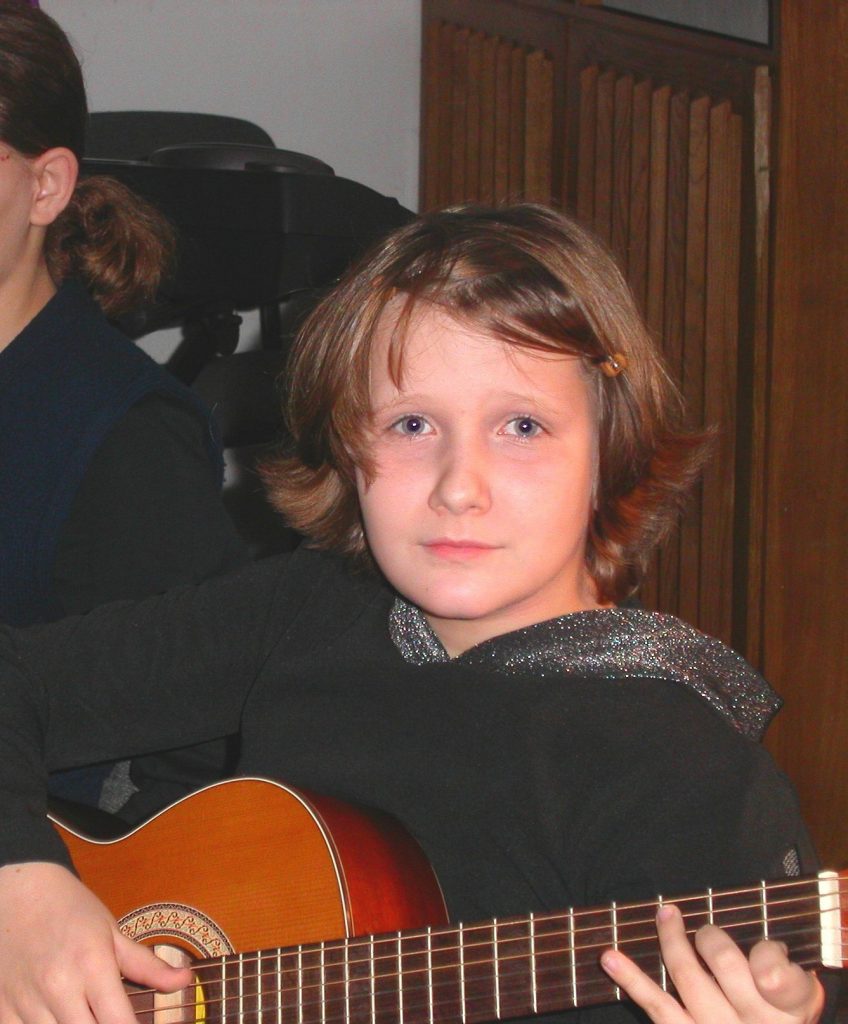
My parents played the piano. My dad graduated from music school with a degree in organ, and then studied sound engineering, while my mom graduated from school and college with a degree in rhythmics (music theory). As a child, I tried to learn to play the piano, but I didn’t have the patience for it. My parents didn’t either 😉 But the guitar… such an unknown world… Completely unknown to my musically educated parents, so I became its official explorer! Thanks to their support, I had an instrument and a teacher. It was extremely gratifying for me that I knew something they didn’t, and that after just a few lessons. I became an expert in this field in my family 🙂 (although I remember that my sister initially surpassed me, which really hurt my pride).
Moi rodzice grali na fortepianie. Tata skończył szkołę muzyczną na organach, a potem studia z reżyserii dźwięku, a moja mama skończyła szkołę i studia z rytmiki (teoria muzyki). Jako dziecko próbowałam uczyć się grać na pianinie, ale nie miałam do tego cierpliwości. Moi rodzice też 😉 Natomiast gitara…. taki nieznany świat…. Kompletnie również nieznany moim wykształconym muzycznie rodzicom, więc to ja zostałam jego oficjalnym eksploratorem! Dzięki ich wsparciu miałam instrument i nauczyciela. Było to dla mnie niezwykle nobilitujące, że umiałam coś, czego oni nie potrafili i to właściwie już po kilku lekcjach. Stałam się ekspertem w tej dziedzinie w mojej rodzinie 🙂 (choć pamiętam, że moja siostra początkowo mnie prześcignęła, co mi mocno wjechało na ambicje).
Well, so from the age of 10 until now (wow, that’s 25 years already!), playing music, my fascination with songs, compositions, and creating moods through sounds has been my air freshener. You know, not the scented kind, but the kind that turns mustiness into freshness after rain. Playing this recital in such a way that the audience could feel this breath of fresh air was not an effort for me. However, organizing this event was a completely different story. As they say, “They didn’t teach us that in school.”
Dobrze, zatem tak właśnie od 10 latki do teraz (rety, to już 25 lat!) zajmowanie się graniem, fascynacja utworami, kompozycjami, tworzeniem nastroju poprzez dźwięki była dla mnie moim odświerzaczem powietrza. Takim wiecie, nie zapachowym, tylko takim co zamienia stęchliznę w świeżość po deszczu. Zagranie tego recitalu tak, aby słuchacze poczuli ten odświeżacz powietrza nie było dla mnie wysiłkiem. Za to zorganizowanie tego wydarzenia, to zupełnie inna para kaloszy. Jak to się mówi: “Tego nas w szkole nie uczyli”.
First, there had to come a moment when I said to myself “Now is the time”. No more hiding behind my colleagues. No more counting on their success to lift me up too. No more vague resentment towards the world for not noticing me and what I am able to do. Looking back on the last year, I see that I allowed myself to be absorbed into a world where the belief that “it’s hard” or “it can’t be done” or other such statements were repeated a little too often in the conversations around me, and there wasn’t enough of a “okay, let’s try it a different way this time.” Sometimes it’s hard to be the only one initiating ideas, especially when those ideas are not well received and you get another ones in return.
Po pierwsze musiał nadejść moment w którym powiedziało się sobie “to już”. Czyli koniec chowania się za kolegami i koleżankami z zespołu. Koniec liczenia na to, że ich sukces wzniesie także i mnie. Koniec niesprecyzowanego żalu do świata o to, że jeszcze nikt nie dostrzegł mnie i tego co potrafię. Z perspektywy ostatniego roku widzę, że pozwoliłam sobie wsiąknąć w świat w którym przekonanie o tym, że “jest ciężko”, albo “nie da się” albo inne takie, trochę za długo przewijały się w rozmowach dookoła mnie i za mało było “no dobra, tym razem spróbujmy to zrobić w inny sposób”. Czasem ciężko być jedynym inicjatorem pomysłów, a zwłaszcza gdy te pomysły się nie podobają i nie dostajesz innych pomysłów w zamian.
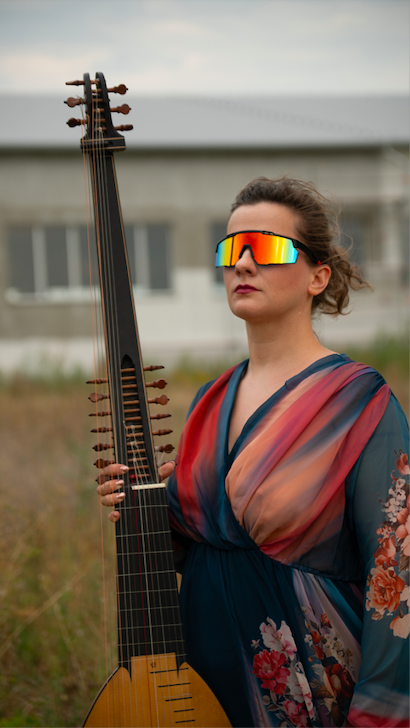
(me, and my ideas)
(ja i moje pomysły)
Dobra, chwila marudzenia a teraz już czas na przygodę. W maju usłyszałam: “Przestań się chować. Jak nie masz ludzi to rób to sama”. A jak już robisz, to rozpisz sobie harmonogram i jak “tępa dzida” (słowa mojej ówczesnej mentorki) przyj do przodu codziennie. Tak zrobiłam. Niemal z marszu zatrudniłam moją siostrę na stanowisko asystentki i zaczęłyśmy się spotykać i działać. Social media, Patreon, podcast, teksty na stronę, do oferty, sesja zdjęciowa i tak dalej i tak dalej. W czerwcu znalazłam miejsce w którym chciałam zagrać. Była to kameralna sala na Warszawskim Starym Mieście – nazywała się Time for Chopin. Właścicielka tego miejsca, dzięki temu, że znała mojego tatę, nie miała problemu z tym, aby mi zaufać i chcieć pomóc w tym debiucie. Spodobał jej się koncept artystyczny – łączenie czasów przy pomocy mixów muzyki tradycyjnej i tej wyrafinowanej, z użyciem wirtuozerii na lutni oraz mojego głosu był dla niej czymś co chętnie dodała do oferty swojego miejsca.
All right, enough complaining, now it’s time for adventure. In May, I heard: ‘Stop hiding. If you don’t have a crew, do something yourself.’ And once you do, write yourself a schedule and, like a “stupid chick” (the words of my mentor at the time), push forward every day. So I did. Almost immediately, I hired my sister as my assistant, and we started meeting and working. Social media, Patreon, podcast, texts for the website, for the offer, photo shoot, and so on and so forth. In June, I found a place where I wanted to play. It was an intimate venue in Warsaw’s Old Town called Time for Chopin. The owner of the place, thanks to the fact that she knew my dad, had no problem trusting me and wanted to help me with my debut. She liked the artistic concept – combining different eras by mixing traditional and sophisticated music, using virtuosity on the lute and my voice – and was happy to add it to her venue’s offer.
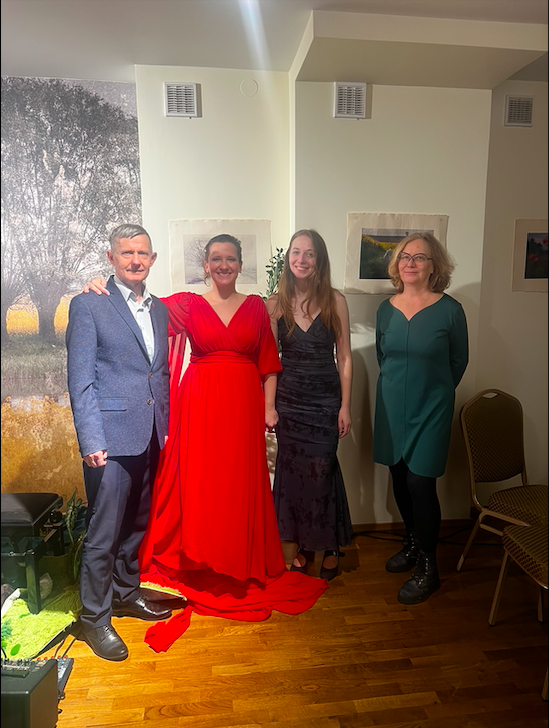
(with my dad, one of my sisters, my mom)
(z moim tatą, jedną z sióstr, mamą)
No dobrze, ale teraz się znowu zastanawiam… Co chcielibyście wiedzieć? Czy się stresowałam? Czy miałam jakieś przeszkody po drodze? Jak powstał repertuar? Ale tak od strony logicznej, czy magicznej? 😉 Bez Waszych pytań mogę sobie tak gadać i gadać, ale w sumie nie wiem czy gadam z sensem albo czy odpowiadam na pytania, które Was interesują 😉
Well, but now I’m wondering again… What would you like to know? Was I stressed? Did I encounter any obstacles along the way? How did the repertoire come about? From a logical or magical point of view? 😉 Without your questions, I can just talk and talk, but I don’t really know if I’m making sense or answering the questions that interest you 😉
Chcę Wam opowiedzieć o tym, dlaczego gram na lutni. Ale czy mam zacząć od momentu w którym przeskoczyłam z gitary na studia lutni, czy może o przełomowy moment w mojej karierze w którym zamówiłam tę lutnię, którą widzicie na moich ostatnich zdjęciach, która sprawiła, że moja wrażliwość i umiejętności nareszcie miały szanse rozkwitnąć?
I want to tell you why I play the lute. But should I start from the moment when I switched from guitar to lute studies, or perhaps from the turning point in my career when I ordered the lute you see in my recent photos, which finally allowed my sensitivity and skills to blossom?
To może zacznę od Tego, dlaczego gram na lutni. Otóż w odkrywaniu rzeczy jeszcze nie wyeksplorowanych do cna możliwości zawsze upatrywałam wolność. Gdy jako dziecko moi rodzice, pianiści dali mi gitarę, wtedy byłam odkrywcą na skalę rodziny. Gdy kończyłam szkołę muzyczną na gitarze, świat gitarzystów był mi już znany do cna. Znałam masę osób, które grały ode mnie znacznie sprawniej gamy i pasaże. Wtedy to się liczyło. To sprawiało, że dostawali się oni na studia, albo wygrywali konkursy. Nie dostawało się punktów za nieszablonowe rozumienie tekstu albo wyczucie frazy. Gdy ja eksplorowałam jakiś utwór pod kątem magii jego odczuwania, moi koledzy ćwiczyli wprawki na legato. Stawaliśmy potem na tej samej scenie jeden po drugim, oni dostawali najwyższe noty, a ja te całkiem przeciętne. I tak dochodziliśmy do pewnego wyczerpania formuły, która nie była dla mnie atrakcyjna. Szkoda mi było porzucać gitarę. Utopiłam w niej dużą część swojej osobowości. Jednak nadszedł czas rozstania. Nie z mojej winy i nie z winy gitary. Przyszedł czas na nowy rozdział, czyli lutnię.
Let me start with why I play the lute. Well, I have always seen freedom in discovering things that have not yet been fully explored. When my parents, who were pianists, gave me a guitar as a child, I was a sensation on a family scale. When I graduated from music school with a guitar, I already knew the world of guitarists inside out. I knew lots of people who played scales and passages much better than me. That’s what mattered back then. It got them into university or winning competitions. You didn’t get points for an unconventional understanding of the text or a feel for the phrase. While I was exploring a piece in terms of the magic of its feeling, my colleagues were practising legato exercises. We would then stand on the same stage one after the other, they would get the highest marks, and I would get quite average ones. And so we reached a certain exhaustion of the scheme, which was not attractive to me. I was sorry to give up the guitar. I had invested a large part of my personality in it. However, the time had come to part ways. It was not my fault, nor was it the guitar’s fault. The time had come for a new chapter, namely the lute.
Jak lutnia znalazła się w moim życiu? Zbieg różnych okoliczności.
How did the lute come into my life? It was a series of coincidences.
1. Moja przyjaciółka Klaudyna (jeszcze wtedy nie przyjaciółka, bo ledwo się znałyśmy) postanowiła zdawać na lutnię do innego miasta (Bydgoszcz). Bo gdyby zdawała do tego co ja (Kraków), gdzie siedział mój przyszły profesor, nie dostałabym oferty studiowania lutni na podstawie egzaminu z gitary.
1. My friend Klaudyna (not yet a friend at the time, as we barely knew each other) decided to apply to study the lute in another city (Bydgoszcz). If she had applied to the same place as me (Krakow), where my future professor was based, I would not have been offered a place to study the lute on the basis of my guitar exam.
2. Na egzaminie wstępnym na studia z gitary klasycznej siedział profesor od lutni któremy brakowało studentów – no bo umówmy się, któżby szedł studiować na 5 lat lutnię? Czysta fanaberia. Swoją drogą zdawałam na gitarę klasyczną, ale nie chciałam jej studiować. Dałam się namówić. Chciałam studiować jazz, ale brakowało mi przygotowania.
2. At the entrance exam for classical guitar studies, there was a lute professor who was short of students – because let’s face it, who would go to study the lute for five years? Pure whim. By the way, I took the exam for classical guitar, but I didn’t want to study it. I let myself be persuaded. I wanted to study jazz, but I lacked the preparation.
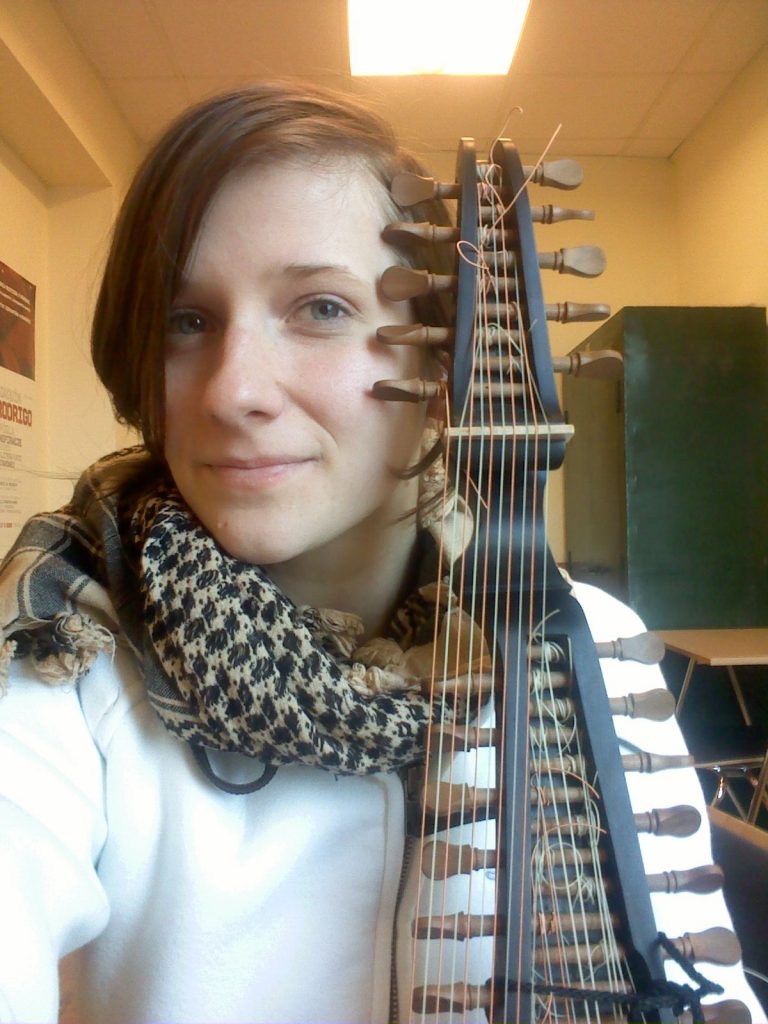
3. Gdy dostałam ofertę studiowania lutni na podstawie egzaminu z gitary, odmówiłam. Lutnia? A na co to komu potrzebne? Ile to w ogóle ma strun i przecież nie ma na to napisanych żadnych fajnych utworów, a tak w ogóle to ten pan śmierdzi papierosami, jakiś taki gruby jest i nieciekawy. Natomiast gdy usłyszała to moja przyjaciółka Ania, gdy szłyśmy na dworzec kolejowy aby wrócić do naszego miasta, powiedziała “Zawracaj! Idziemy tam z powrotem i powiemy, że CHCESZ STUDIOWAĆ LUTNIĘ!”. Anna jest mistrzynią rozpoznawania i chwytania szans. Podziwiam ją za to. We mnie była natura unikania rozczarowań i trudności. W niej? Nigdy. A przynajmniej ja nie zauważyłam. “A skąd ja wezmę lutnię do tego studiowania?” – spytałam. “Załatwię ci, znam kogoś kto ci pożyczy”. I w ten sposób dostałam się na studia na lutnię. Instrument, który Ania chciała mi pożyczyć, nie nadawał się, nauczyciel też nie za bardzo (głównie chodziliśmy pić kawę i palić papierosy, zdarzyło mu się także zasnąć na mojej lekcji). Głównie mi mówił, że jestem zdolna i mam ćwiczyć więcej. Ale instrument pożyczyłam od kogoś innego, a nauczyciela zmieniłam na tego, do którego poszła Klaudyna i w ten sposób studiowałyśmy razem u wspaniałych Antona i Anny Birulów w Bydgoszczy. Ja i Klaudyna Żołnierek – duet AbsoLutes!
3. When I received offer to study lute based on guitar exam, I refused. A lute? Who needs that? How many strings does it have anyway, and there aren’t any cool songs written for it, and besides, this man smells of cigarettes, he’s kind of fat and uninteresting. However, when my friend Ania heard this as we were walking to the train station to return to our city, she said, ‘Turn around! Let’s go back there and say that you WANT TO STUDY THE LUTE!’ Anna is a master at recognising and seizing opportunities. I admire her for that. I had a tendency to avoid disappointment and difficulties. Her? Never. At least, I never noticed it. ‘Where am I going to get a lute to study?’ I asked. ‘I’ll get you one, I know someone who will lend you one.’ And that’s how I got into lute studies. The instrument Ania wanted to lend me wasn’t suitable, nor was the teacher (we mainly drunk coffee and smoked cigarettes, and he even fell asleep during my lesson once). He was mainly telling me that I was talented and should practice more. But I borrowed an instrument from someone else and changed teachers to the one Klaudyna went to, and that’s how we studied together with the wonderful Anton and Anna Birula in Bydgoszcz. Klaudyna Żołnierek and I – the AbsoLutes duo!
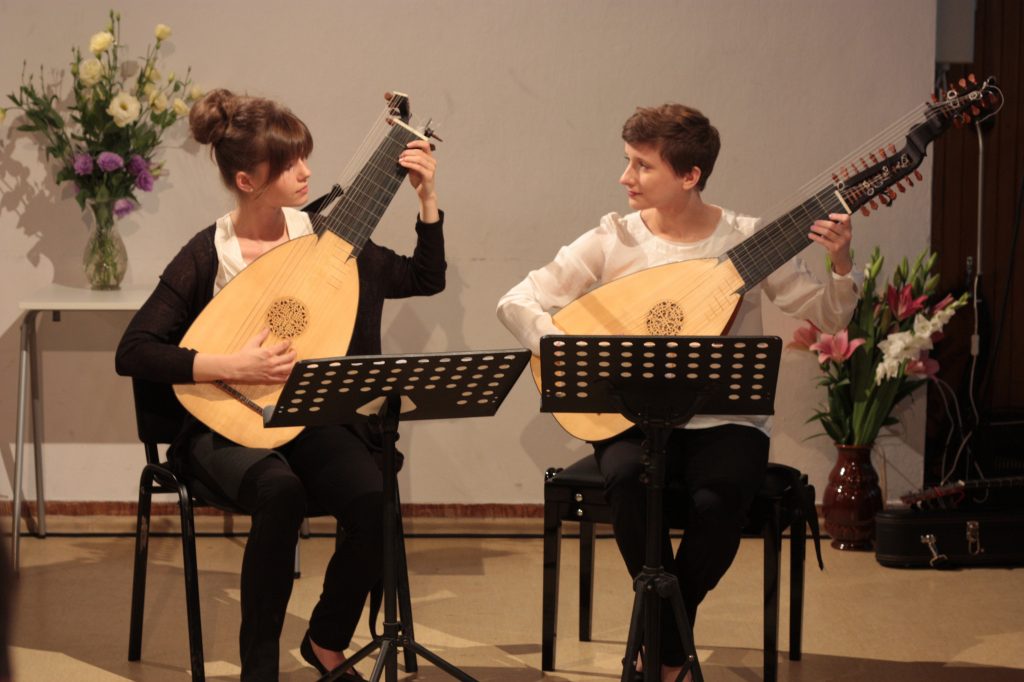
Absolutes, 2015
Widzicie, miałam Wam opowiedzieć o koncercie, a poszłam w inną stronę. Ale opowiem o koncercie! Tylko błagam, plis, zadajcie pytanie. Co Was interesuje?
You see, I was supposed to tell you about the concert, but I went off on a tangent. But I will tell you about the concert! Just please, ask a question. What interests you?
Przygotowania do koncertu:
Cofnę się o kilka lat. Przełomowy dla wszystkich czas, pandemia. Rosnące przekonania społeczne o tym, że artyści zostają bez szans na przeżycie. Ja dopiero co urodziłam drugie dziecko. Kompletnie bezbronna, chronicznie niewyspana, kompletnie polegająca na pracy zawodowej męża, który był nauczycielem gitary i świeżo postawionym dyrektorem. Mój werdykt? Nie nadaję się do żadnej pracy, nic nie jestem warta, moje studia z lutni są mi do niczego niepotrzebne, jedyną moją szansą na stałą pracę będzie skończenie studiów z gitary klasycznej i zostanie nauczycielką. Szczytem aspiracji było uczenie w szkole średniej, nie podstawowej. Wiecie, to niesamowite co się dzieje w ludzkich przekonaniach, że bardzo inteligentna, wrażliwa, pracowita kobieta ma pewność na swój temat, że nic więcej w życiu nie osiągnie…
Preparations for the concert:
Let me go back a few years. A turning point for everyone, the pandemic. Growing public belief that artists have no chance of survival. I had just given birth to my second child. Completely defenceless, chronically sleep-deprived, completely dependent on my husband’s job, who was a guitar teacher and a newly appointed headmaster. My verdict? I’m not fit for any job, I’m worthless, my lute studies are useless, my only chance for a permanent job will be to finish my classical guitar studies and become a teacher. The height of my aspirations was to teach in secondary school, not primary school. You know, it’s amazing what happens in people’s minds, that a very intelligent, sensitive, hard-working woman is certain that she will never achieve anything more in life…
(Aha, zanim zdałam na gitarę, to z dzidziusiem u nogi próbowałam dostać się do jedynej szkoły w Warszawie na wokalistykę jazzową. Nie wpuścili mnie na egzamin, bo byłam za stara. Swój czas “młodości” “zmarnowałam” na rodzenie dzieci…)
(Oh, before I passed my guitar exam, I tried to get into the only school in Warsaw that taught jazz singing, with my baby in my arms. They didn’t let me take the exam because I was too old. I had ‘wasted’ my ‘youth’ on having children…)
Zdałam na gitarę. Dostałam się i spędziłam dwa lata na ćwiczeniu trudnych utworów i próbie pogodzenia zajęć (na szczęście dzięki pandemii większość była online) razem z pracą i dziećmi. Przeszłam też wtedy załamanie nerwowe, ale za to rozwijałam się pod względem możliwości technicznych i repertuarowych. Dwie rzeczy podczas tych studiów były dla mnie przełomowe. Po pierwsze, podczas pobytu na letnich kursach gitarowych organizowanych przez mojego nauczyciela z gitary, poznał mnie ktoś, kto nie jest muzykiem, ale postanowił mi pomóc wyrwać się z bańki w której utknęłam. Uznał, że mój zapał i sztuka która przeze mnie przemawia jest tego warta. Jestem mu bardzo wdzięczna. Zobaczył we mnie osobę która ma odwagę marzyć i realizować się w nietypowej dziedzinie. Robił dla mnie research tego jak mogę się wybić w muzyce i nie był on spaczony przekonaniami ze środowiska o tym co powinno się robić, a w rzeczywistości wcale nie pomaga.
I passed my guitar exam. I got in and spent two years practising difficult pieces and trying to juggle my studies (fortunately, thanks to the pandemic, most of them were online) with work and children. I also had a nervous breakdown during that time, but I developed my technical skills and repertoire. Two things during my studies were groundbreaking for me. First, while attending summer guitar courses organised by my guitar teacher, I met someone who is not a musician but decided to help me break out of the bubble I was stuck in. He decided that my enthusiasm and the art that speaks through me was worth it. I am very grateful to him. He saw in me a person who has the courage to dream and fulfil herself in an unusual field. He did research for me on how I could make it in music, and he was not biased by the beliefs of the community about what should be done, which in reality does not help at all.
Drugą przełomową rzeczą było moje (sic!) załamanie nerwowe. Jestem ambitna i mój recital dyplomowy też miał być ambitny. Wyobrażałam sobie siebie w roli solistki grającej z orkiestrą. Wyobrażałam sobie materiał jaki dodam na YouTube i to, że będę pierwszą gitarzystką która zrobiła transkrypcję koncerty skrzypcowego d-moll Bacha na gitarę i zagra go olśniewając cały świat muzyczny i całego jutuba wszechczasów. Skończyło się na fantazjach. A potem zastąpiła je frustracja, chęć rezygnacji ze studiów, wyczerpanie psychiczne które było już ostatnim krokiem przed zgłoszeniem się do szpitala. Nie poszłam jednak do tego szpitala. Nie chciałam robić sobie logistycznego kłopotu. Ani rodzinie.
The second turning point was my (sic!) nervous breakdown. I am ambitious, and my graduation recital was supposed to be ambitious too. I imagined myself as a soloist playing with an orchestra. I imagined the material I would add to YouTube and that I would be the first guitarist to transcribe Bach’s Violin Concerto in D minor for guitar and play it, dazzling the entire music world and the entire YouTube of all time. It ended in fantasies. And then they were replaced by frustration, the desire to give up my studies, mental exhaustion, which was the last step before going to hospital. However, I did not go to hospital. I did not want to cause myself logistical trouble. Nor my family.
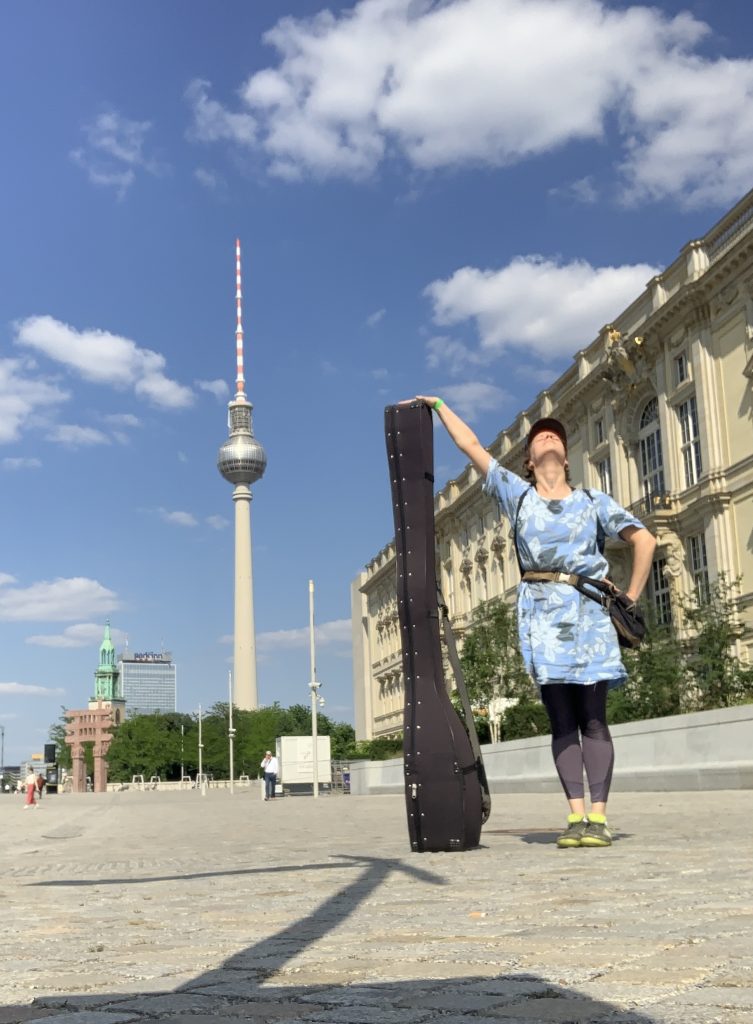
Miałam też inne zadania do wykonania i szpital by mi je uniemożliwił (na zdjęciu Berlin, tuż przed egzaminem)
I also had other tasks to complete, and the hospital would have prevented me from doing so (photo: Berlin, just before the examination).
3 tygodnie przed egzaminem dyplomowym już wiedziałam, że nie dam rady zagrać tego co zaplanowałam. Zaczęły się negocjacje. Nie miałam repertuaru na 45 minut egzaminu. Postanowiłam zagrać rzeczy znacznie prostsze, grać je z większą ilością powtórek, które wydłużały czas trwania mojego egzaminu. Wewnątrz tych powtórek wprowadzałam jakieś improwizacje, przed każdym utworem grałam improwizowane kadencje, które wydłużały każdy utwór o kilka minut. Na egzaminie postawiłam przed sobą zegarek. Musiałam jakoś zapełnić ten czas i musiałam widzieć ile mi zostało. Miałam tendencję do wyczerpywania wszystkich moich sił w kilka minut. Wiedziałam, że w kwestii poczucia czasu nie mogę sobie ufać. Musiałam spoglądać na zegarek.
Three weeks before my final exam, I already knew that I would not be able to play what I had planned. Negotiations began. I did not have enough repertoire for a 45-minute exam. I decided to play much simpler pieces, with more repetitions, which would extend the duration of my exam. I introduced some improvisations into these repetitions, and before each piece I played improvised cadences, which extended each piece by a few minutes. During the exam, I placed a watch in front of me. I had to fill the time somehow and I had to see how much I had left. I had a tendency to exhaust all my strength in a few minutes. I knew that I couldn’t trust my sense of time. I had to look at the watch.
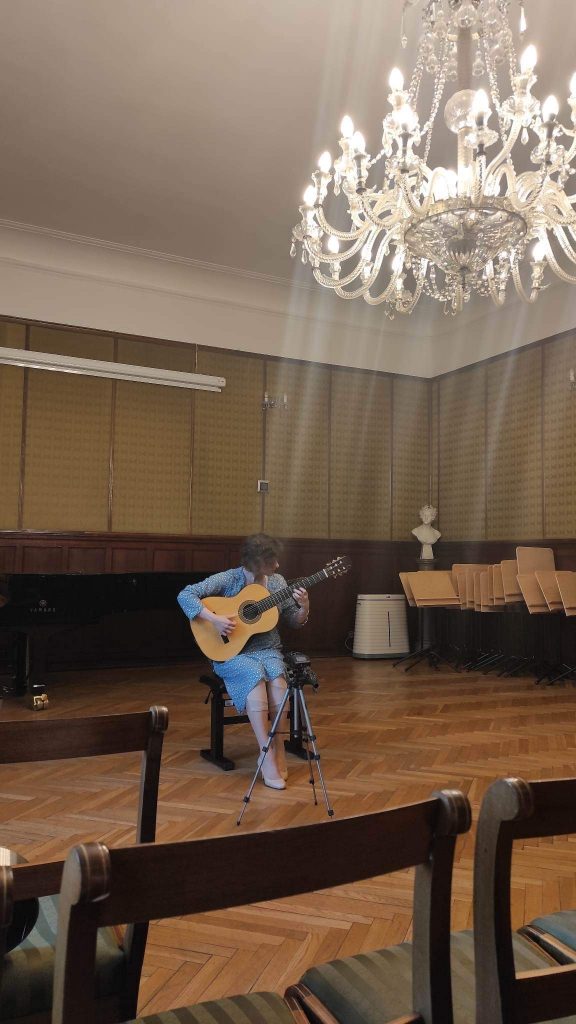
Ja i zegarek w pierwszym rzędzie
Me and the watch in the first row
Czemu ten egzamin był przełomowy? Otóż dostałam za niego najwyższy możliwy stopień. Osoba, która była przewodniczącą komisji, już od pierwszych egzaminów dostrzegała we mnie więcej niż umiejętność sprawnego grania gam i pasaży. Doceniła to, co działo się na tym egzaminie pod względem muzycznym, wrażliwym, emocjonalnym. Doceniła to, co zawsze było we mnie i jak trudno mi było się z tym przebić próbując jednocześnie sprostać standardom technicznym. Dzięki tej sytuacji pozwoliłam sobie zrozumieć, że ten gruby łańcuch w postaci ambitnych utworów, który zarzucam sobie na szyję, tylko mnie spowalnia, albo nawet hamuje. Pozwoliłam sobie powiedzieć “Mario, jak zagrasz coś prostszego, to dasz sobie przestrzeń na najważniejsze dla ciebie rzeczy”. I to przekonanie sprawiło, że powstał mój repertuar na koncert. Czuły, nieraz prosty, ale także wyrafinowany, czasem lekko agresywny (na ile może być agresywne granie na lutni oraz tradycyjny śpiew) a czasem magicznie cichy.
Why was this exam a turning point? Well, I received the highest possible grade for it. From the very first exams, the chair of the committee saw in me more than just the ability to play scales and passages efficiently. She appreciated what was happening in this exam in terms of music, sensitivity and emotion. She appreciated what had always been inside me and how difficult it was for me to break through while trying to meet technical standards at the same time. Thanks to this situation, I allowed myself to understand that this heavy chain in the form of ambitious pieces, which I throw around my neck, only slows me down or even holds me back. I allowed myself to say, ‘Maria, if you play something simpler, you will give yourself space for the things that are most important to you.’ And this conviction led to the creation of my concert repertoire. Sensitive, sometimes simple, but also sophisticated, sometimes slightly aggressive (as much as playing the lute and traditional singing can be aggressive) and sometimes magically quiet.
Tak powstała paleta, która dała przestrzeń do wzruszeń, kontemplacji, wnikliwego słuchania, a także oddania się energii prowadzonej przez dźwięki. Jestem dumna z tego, co wydarzyło się w sali Time for Chopin 7, 8 oraz 9 listopada. Jestem wdzięczna tym, którzy mi zaufali, przychodząc. Jestem szczęśliwa, że każdy na sali miał powód do zachwytu, uśmiechu. Odczuwam satysfakcję, że osoby, które przyszły bez przekonania, opowiadały o ciarkach na plecach i o tym, że o ile nie są fanami muzyki poważnej, to już są moimi fanami. Głęboko przeżywam to, że wyjęłam swoje serce, położyłam na dłoni, pokazałam przed reflektorami, przed mikrofonami i spotkałam się z wdzięcznością za prawdziwość, czułość, naturalność (co zwłaszcza przy tych skomplikowanych barokowych utworach nie jest normą) i wybitność techniczną. Bo tak, jestem sprawna technicznie. Gram świetnie, po prostu nigdy nie byłam i nie chciałam być tym robokopem, który bez zastanowienia strzela dźwiękami jak z karabinu. Nigdy.
Thus a palette emerged that created space for emotion, contemplation, attentive listening, and for surrendering to the energy carried by the sounds. I am proud of what happened in the Time for Chopin hall on 7, 8 and 9 November. I am grateful to those who trusted me by coming. I am happy that everyone in the hall had a reason to be delighted and smile. I feel satisfied that people who came without conviction talked about goosebumps and that, even if they are not fans of classical music, they are now my fans. I am deeply moved by the fact that I took my heart out, laid it on my palm, showed it in front of the spotlights and microphones, and was met with gratitude for my authenticity, sensitivity, naturalness (which is not the norm, especially with these complex Baroque pieces) and technical excellence. Because yes, I am technically proficient. I play great, I just never was and never wanted to be that RoboCop who fires off sounds like a machine gun without thinking. Never.
Dziękuję Ci, że przeczytałeś/aś to do końca. Życzę Ci miłego miesiąca z muzyką. Maria
Thank you for reading this to the end. I wish you a lovely month with music. Maria
You can become my Patron on: www.patreon.com/WilgosLutes
Możesz zostać moim patronem na: www.patronite.pl/WilgosLutes